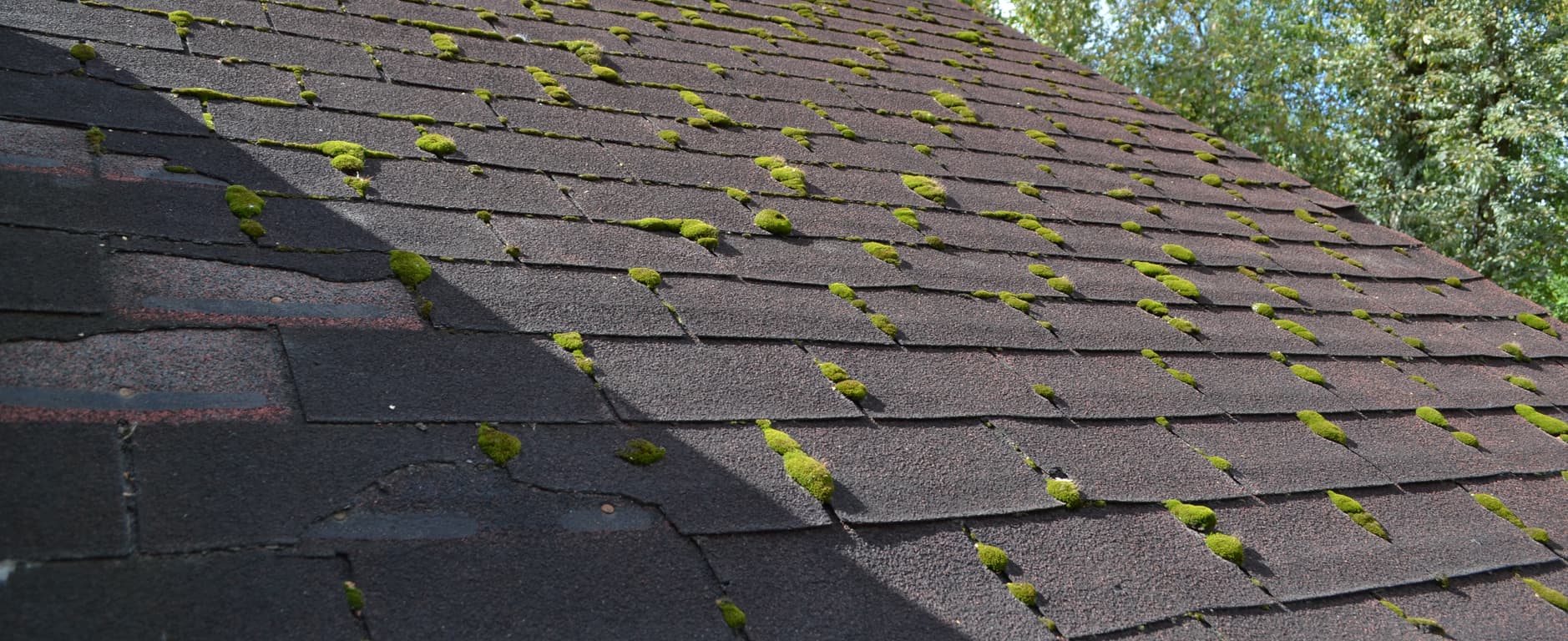
What a Roof Leak Really Does to Your Floors: A Hollywood FL Homeowner's Guide
The most expensive part of a roof leak usually is not the roof. Here is what water does to hardwood, laminate, carpet, and tile, and how fast you have to move.
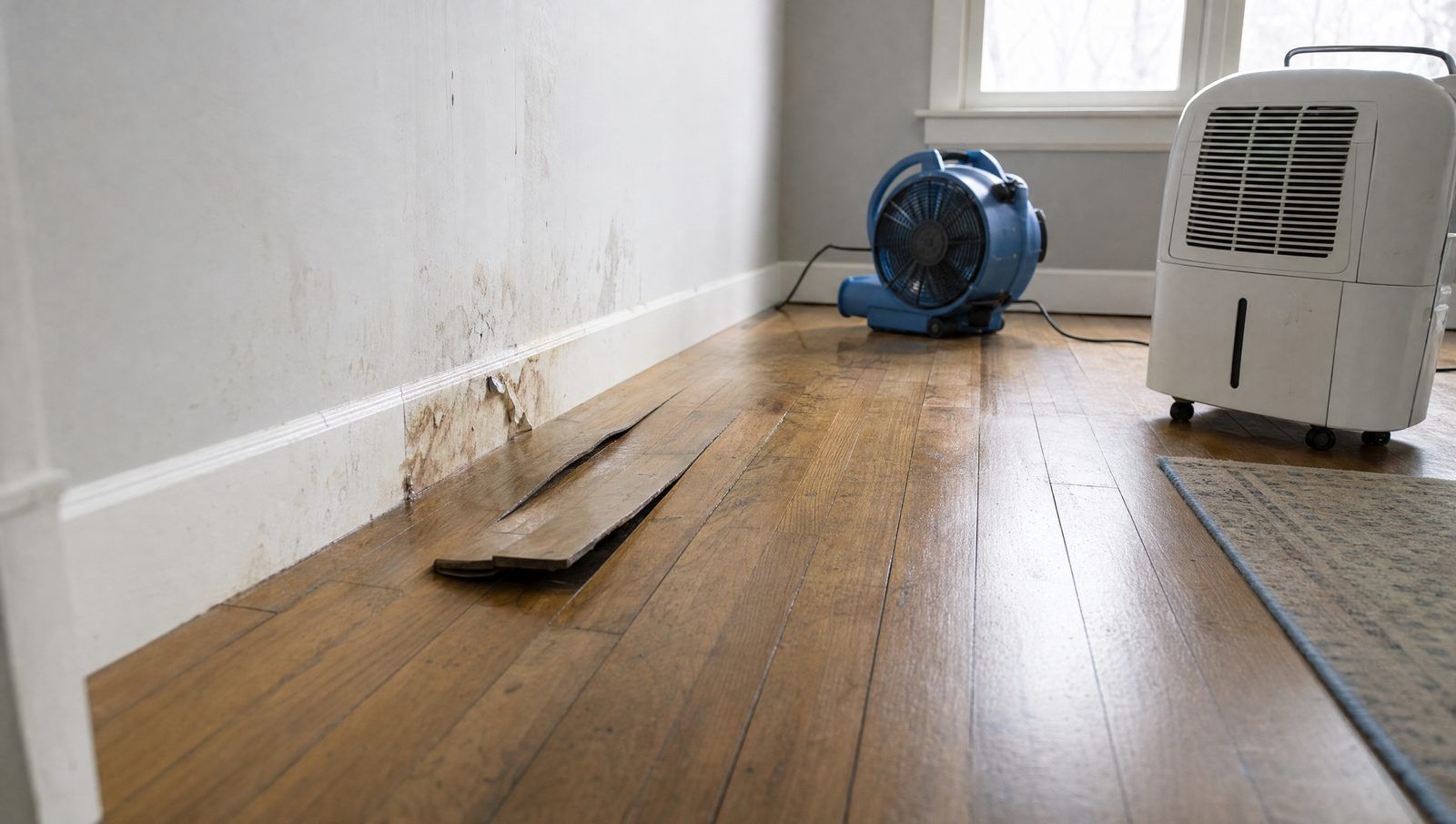
When Hollywood homeowners picture roof damage, they picture the ceiling: the brown ring on the drywall, the drip into a bucket during a July downpour. But ask anyone who has actually been through a serious leak and they will tell you where the expensive damage ended up. It ended up in the floors.
Water obeys gravity. It gets past the shingles, finds a path through the decking, and keeps going until something absorbs it, and the material that absorbs it best is usually the flooring two stories down.
The path water takes through a house
A roof leak almost never drops straight into the room below the hole. Water runs along rafters, follows the top of the drywall, and travels down inside wall cavities, which is why the wet spot on your floor can be fifteen feet from the actual breach in the roof.
That travel time matters. By the time water shows up at floor level, it has often been moving through the structure for days or weeks, soaking insulation, framing, and baseboards along the way.
What a leak does to each type of floor
Hardwood is the most dramatic victim. Planks absorb moisture through their unsealed undersides, then cup, crown, and buckle, and once a board has deformed, drying it rarely flattens it again. Laminate is worse: its fiberboard core swells on contact and the damage is permanent almost immediately.
Carpet can sometimes be saved if it is dried within a day or two, but the padding underneath usually cannot, and wet padding under dry-looking carpet is a mold farm. Even tile is not immune, since water trapped in the slab or the thinset wicks into grout lines and baseboards. Flooring specialists see this pattern in every climate, by the way, not just hurricane country: outfits as far north as Michigan, like All Season American Flooring, deal with the same cupped hardwood and swollen laminate after ice-dam leaks that we see here after tropical storms. Water does not care about the zip code.
The 48-hour window
Almost everything about the cost of a leak comes down to speed. Floors dried within 48 hours can often be rescued with fans, dehumidifiers, and patience. Past that window, materials start to delaminate and mold gets its foothold, and the job changes from drying to demolition.
So the moment you see water at floor level, two calls matter: one to a roofer to stop the source, and one to whoever will handle the drying. Doing the second without the first is pointless, because the next rain refills everything you just dried.
After the fix: the humidity problem nobody budgets for
Here is the part that catches people in South Florida. Even after the roof is patched and the visible water is gone, the moisture that soaked into the slab, the framing, and the subfloor keeps evaporating into the house for weeks.
Indoor humidity climbs, the AC fights it around the clock, and any new flooring installed too early absorbs that moisture and fails. A good installer will put a moisture meter on the subfloor before laying anything, and if yours does not ask for one, that is a red flag worth acting on.
Protecting your floors during roof work itself
One last thing homeowners rarely think about: the reroof itself is a risk window. Tear-off exposes the decking, and an afternoon storm during a Hollywood summer can put more water into a house in twenty minutes than a slow leak manages in a year.
Ask your roofing contractor how much deck they open at a time and how they dry-in at the end of each day. The good ones never leave more roof open than they can cover before the radar turns ugly, because they know the real cost of that gamble is not the shingles. It is everything under them, starting with your floors.